





In 1988, with international pressure against apartheid at its crescendo, South Africa’s then State President Pieter Willem Botha reportedly said Black Africans were incapable of governing themselves.
The statement, which was widely circulated but never verified in an official transcript, was blunt: “Black people cannot rule themselves because they don’t have the brain and mental capacity to govern a society. Give them guns, they will kill themselves; give them power, they will steal all the government money; give them independence and democracy, they will use it to promote tribalism, ethnicity, bigotry, hatred, killings and wars.” A longer version of an alleged 1985 speech described Black people as “a symbol of poverty, mental inferiority, laziness and emotional incompetence.”
Botha was the architect of “reform apartheid,” a policy that eased some racial restrictions while entrenching white minority rule.
He legalized interracial marriage, relaxed the Group Areas Act, and gave limited political rights to Coloured and Indian South Africans. But he balked at black majority rule, refusing to negotiate with the African National Congress or free Nelson Mandela for much of his tenure. Whether his words were authentic or not, they constituted the ideological core of apartheid: that white minority rule was a necessity, as Black Africans were not capable of self-government.
More than three decades after the end of apartheid and the establishment of democracy in South Africa, that claim has re-emerged in public discourse, not from white supremacists but from some Africans responding to a painful reality: the periodic eruption of xenophobic violence against fellow Africans in South Africa.
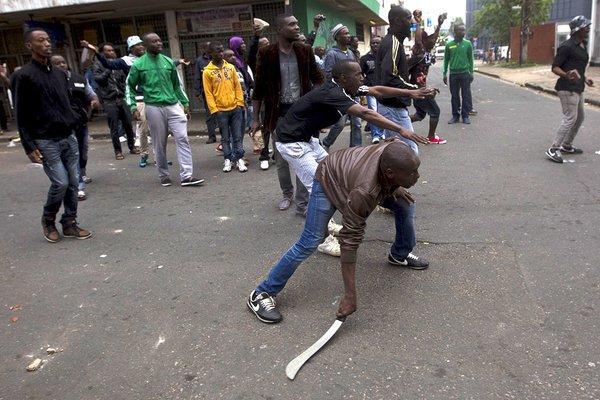
South Africa has been hit by successive waves of attacks on African migrants since 2008. Shops belonging to Nigerians, Somalis, Zimbabweans and Mozambicans were looted and burned. Foreign nationals have been beaten, killed and driven out of townships. Mobs targeted foreign-owned businesses in Johannesburg and Pretoria in September 2019, forcing hundreds to flee. In 2021, and again in 2023, similar violence flared in Durban and Gauteng, often justified by perpetrators as a response to unemployment and crime.
The victims are not Europeans or Asians . They are Africans, compatriots of the African Union, compatriots of the African Continental Free Trade Area, compatriots of a continent that preaches Pan-African solidarity. The bitterness is bitter. The country that itself experienced decades of racial exclusion now has parts of its population excluding other Black Africans in similar ways.
It is in this context that the alleged statement of Botha is being recalled. For some commentators, the attacks are more than criminal acts. They are seen as symptoms of a deeper malaise, a breakdown in governance, social cohesion and civil responsibility that extends beyond the borders of South Africa, into the wider African experience.
Africa is the world’s youngest continent, with 60% of its population under 25 years old. It is also the most resource-rich, holding 30 percent of the world’s mineral reserves and 65 percent of its arable land. However, it is still the least developed continent on virtually every index, from GDP per capita to healthcare, education and infrastructure
It’s complicated and has to do with history. Colonialism dismantled indigenous governance structures, imposed arbitrary borders, and created extractive economies meant to serve European powers. Many African states inherited weak institutions at independence and were immediately faced with Cold War proxy conflicts, debt burdens and the challenge of nation-building across diverse ethnic groups.
The result has been a pattern of instability: civil wars in Liberia, Sierra Leone, Rwanda, and in Sudan. Military coups in Mali, Burkina Faso, Niger and Guinea. Election rigging, corruption and weak rule of law in many countries. Banditry and Insurgency in Sahel and North East Nigeria. These are not theory issues. They matter for economic development, for migration, and for how Africans are thought of at home and abroad.
South Africa has not been spared. It has a highly developed infrastructure and democratic institutions but it suffers from inequality, unemployment rates of over 30 percent, and high violent crime rates. In this environment foreigners are often made scapegoats. They are blamed for taking jobs, operating illegal businesses without permits and fueling crime. The story is a familiar one: when institutions can’t provide economic opportunity, it’s the outsider who gets the blame.
At the core of Botha’s argument is the question of institutions, and the uncomfortable question it raises today. Governance is not just about elections. It is about designing systems that establish property rights, enforce contracts, supply public goods and services, and hold leaders accountable. It is a culture where the rule of law supersedes tribal loyalty, where constitutional authority is respected and where citizens feel secure and included.
These institutions are still weak in many African countries. Courts are slow or corrupt. Police are underfunded and perceived as predatory. Civil Service is politicised. Corruption is all around. When the state doesn’t provide security and economic opportunity, informal power structures, ethnic militias, vigilante groups, and criminal gangs fill the vacuum.
South Africa’s xenophobic attacks illustrate the same deficit. The state has been slow to bring perpetrators to justice. Anti-foreigner rhetoric has been employed by political leaders for political gain at times. Communities don’t believe law enforcement is protecting them, and they take justice into their own hands. This results in a collapse of social order akin to the instability elsewhere on the continent.
To ask this question is not to approve of Botha’s racism. His worldview was of white supremacy, of domination by any means necessary. History has proved him wrong in the most fundamental sense: black Africans have ruled themselves since independence, creating countries, universities, businesses and cultural institutions. Botswana, Rwanda, Ghana and Mauritius have demonstrated that stable governance and economic growth are possible in an African context.
But it is also true that self-government has not delivered the prosperity and unity that the early independence leaders such as Kwame Nkrumah, Julius Nyerere and Patrice Lumumba envisioned. Instead, many African states are trapped in cycles of conflict and underdevelopment. The African Union’s Agenda 2063 speaks of a “peaceful and prosperous Africa,” but the reality on the ground is often different.
Xenophobic attacks in South Africa spark a tough conversation. And if Africans cannot protect other Africans in their own countries, what does that say about the project of African unity? How can the continent realize meaningful integration under the African Continental Free Trade Area, if economic competition among Africans breeds violence rather than cooperation?
Botha’s statement was meant to deny Africans agency. The right response is not to embrace it, but to face the failures that give it superficial resonance. This means African governments need to do more to strengthen institutions, protect migrants and address the economic grievances that fuel xenophobia. It means civil society has to tackle hate speech and promote a culture of tolerance. It means citizens have to hold leaders accountable for providing governance that works.
It means also resisting the temptation to generalize. The attacks in South Africa do not represent the views of all South Africans. Many South Africans condemned the violence, offered shelter to foreign nationals and called for solidarity. Not all of Africa’s 54 countries are equally troubled by governance problems. There are islands of stability and progress that provide a counter-narrative.
The real danger is in silence, in a refusal to recognize that something is broken. Africa cannot afford to normalize dysfunction or dismiss criticism as neo-colonialism. Self-determination also brings responsibility: the responsibility to build societies that are just, safe and prosperous for all who live within them, regardless of their nationality.
Pieter Willem Botha’s words were prejudiced and intended to perpetuate oppression. They should be thrown out as a justification for racial exclusion. But the recurring xenophobic attacks in South Africa and the broader governance challenges on the continent call for some honest soul-searching.
The way forward is not to prove Botha right but to prove him wrong by action. That means building institutions that work, economies that create opportunity, and societies that uphold the dignity of every person, African or otherwise. Until then, the question of Africa’s ability to govern itself will remain open, not because of race, but because of the work of state-building that still needs to be done.
Africa’s renaissance will not come by ignoring its problems. It will come from confronting them, learning from them and committing to do better. That is the only reply suitable to the future of the continent.
This is another opportunity to own a faster-loading website to expand your business and take it digitally online. Meet the best website designer/master coder for any kind of website. Contact them now it is affordable Chat now: 09077260922
ALAGA360.COM.NG Advertisement Rate CardReach Thousands of Readers Across Nigeria and Beyond
Display Advertisement Rates
| Advertisement Type | Size | Duration | Price |
|---|---|---|---|
| Homepage Banner | 728 × 90 px | 1 Week | ₦30,000 |
| Homepage Banner | 728 × 90 px | 1 Month | ₦100,000 |
| Sidebar Banner | 300 × 250 px | 1 Month | ₦50,000 |
| Sponsored Article | Full Page | Permanent | ₦50,000 |
| Featured News Publication | Full Article | Per Post | ₦20,000 |
| Event Promotion | Article + Banner | 1 Week | ₦40,000 |
| Political Campaign Coverage | Article + Interview | Per Package | ₦100,000 |
| Business Profile Feature | Full Article | Permanent | ₦75,000 |
| Social Media Promotion | All Platforms | Campaign | Contact Us |
Special Advertising Packages
🥉 Bronze
- ✔ 1 Sponsored Article
- ✔ 1 Month Sidebar Banner
- ✔ Social Media Promotion
🥈 Silver
- ✔ 2 Sponsored Articles
- ✔ Homepage Banner (1 Month)
- ✔ Social Media Promotion
- ✔ Interview Publication
🥇 Gold
- ✔ Unlimited News Coverage
- ✔ Homepage Banner
- ✔ Featured Interview
- ✔ Social Media Campaign
- ✔ Event Coverage