







Nigeria’s ambition to quadruple its daily production of crude oil to three million barrels by 2030 is encountering increasing obstacles, and industry players are cautioning that the goal would become unachievable without prompt government action.
In order to reduce bottlenecks that are impeding project execution and driving up costs, operators are vehemently demanding urgent import duty waivers on vital oil and gas equipment as well as quicker port clearance.
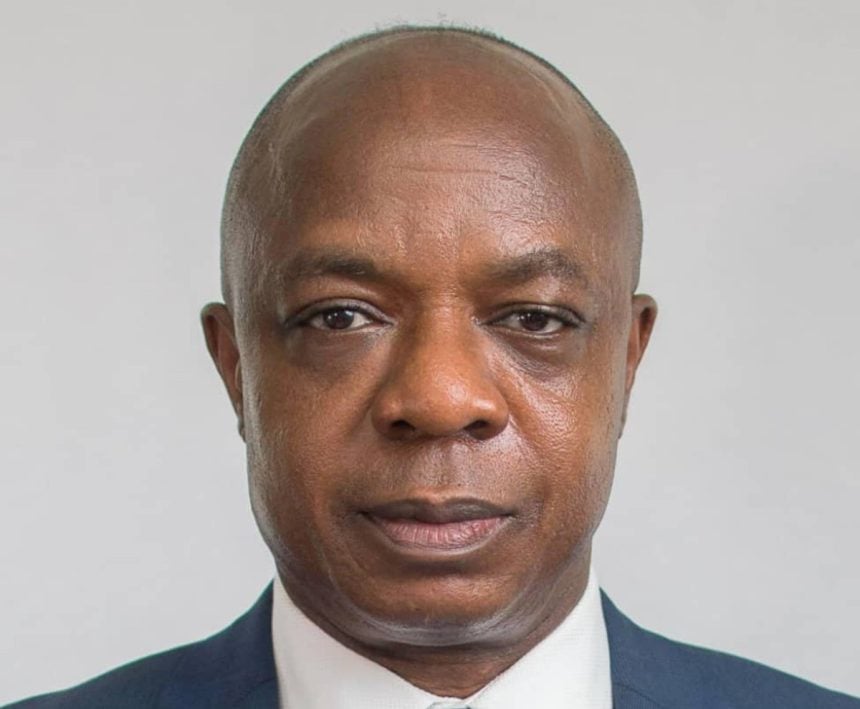
On the fringes of the Offshore Technology Conference in Houston earlier in May, Wole Ogunsanya, Chairman of the Petroleum Technology Association of Nigeria (PETAN), emphasized the appeal.
He claims that the industry is in an emergency phase, necessitating immediate, focused policy action.
He emphasized that increasing production from the current 1.5 million barrels per day would necessitate significant investments in machinery and infrastructure, especially in the gas sector. He also mentioned that tax incentives would provide new funding, expedite the deployment of assets, and bolster Nigeria’s production capability.
In this interview, Ogunsanya argued that although the pharmaceutical and agricultural industries have profited from these waivers, the oil and gas industry—the hen that lays the golden eggs—must not be left behind.
In addition, he stated that in order to ensure its energy future in the face of evolving global economic and geopolitical realities, Africa urgently needs to increase regional cooperation and local capacity development.
Ogunsanya, who is also the CEO of Geoplex Drillteq Limited, emphasized the difficulties Nigerian and African attendees faced at this year’s conference, especially those related to obtaining US visas, which he claimed had a major impact on participation and exhibition activities.
Additionally, he gave lengthy speeches on Africa’s aspirations for energy security, the significance of regional collaboration, the expansion of Nigeria’s domestic oil and gas capacity, and the growing involvement of PETAN member businesses in significant upstream projects.
An outline of OTC 2026 and what’s expected in the future
A significant turning point was OTC 2026. The number of our members and other Nigerian businesses who could have attended this year’s conference to exhibit, highlight Nigeria’s capabilities, and interact with technology owners, equipment manufacturers, and investors was significantly impacted by the difficulties associated with traveling to the United States.
This year, we were severely hindered by the difficulties in obtaining American visas. In fact, you would note that the exhibition rooms were less packed this year compared to earlier editions, not only for Nigeria. There were larger gaps between the booths, and some of them were even covered. Attendance was, in my opinion, only about half of what we had last year.
Nigeria was not the only country facing this problem. Participants came from a variety of nations. Unfortunately, this scenario in the United States had a significant impact on OTC, which is still the world’s leading oil and gas conference.
Nonetheless, we are happy that PETAN and the Nigerian team managed to keep the event lively and participatory. In my opinion, over the past three days, there have been more people visiting the Nigerian area. We also thank Nigerians living in the United States for coming out in big numbers to support us and make sure the event went well in spite of the challenges we had.
The concept
At PETAN, we spend a lot of time strategically analyzing the industry’s future and attempting to predict changes over the next five to 10 years. Thus, after much consideration, the theme for 2026 OTC, “Africa’s Energy Transformation: Scaling Investment, Technology, and Local Capacity for Sustainable Growth,” was carefully chosen.
In terms of economics, energy sourcing, requirements, and distribution, the world is actually changing quickly and getting more regional.
For example, the United States purposefully made significant investments in shale gas production and exploration years ago in response to the wars in Iraq and the Middle East. America opened up chances and technologies to exploit shale gas deposits after realizing the need for energy security.
Similarly, nations like Canada and Brazil are concentrating on ensuring their energy future. While China is making significant investments in electric vehicles, batteries, and renewable technology, Europe is actively seeking renewable energy for sustainability.
This has very apparent implications for Africa. For energy security, we also need to get ready. Africa must realize that its current natural resources will play a major role in ensuring its future energy security.
Africa has a lot of oil and gas resources, even though we may not yet be at the forefront of battery vehicle technology. Because petrochemicals are still necessary for renewable technologies, oil and gas will continue to be important for decades to come. For instance, petrochemicals are used to make the interiors of electric cars. Therefore, it is impossible to fully isolate renewable energy from gas and oil.
The main point is that Africa needs to work together more. To ensure energy security on the continent, African nations must network more effectively. With more than 128 billion barrels of oil under African soil and vast gas reserves dispersed over nations like Nigeria, Algeria, Libya, Mozambique, and Senegal, Africa holds more than 10% of the world’s oil and gas reserves.
The problem is how to use these resources efficiently.
Energy poverty continues to be one of Africa’s biggest issues. Access to energy allows people to keep medications, process agricultural products, preserve food, and generally live better lives. The amount of energy used per person and life expectancy are directly correlated. Africa continues to struggle with low energy consumption and shorter lifespans, whereas nations with higher energy consumption typically have longer life expectancies.
For this reason, Africa cannot be left behind. Collaboration and knowledge exchange are two methods to prevent that, which is why PETAN supported the creation of the African Local Content Roundtable and related projects.
The July 2026 debut of the African Energy Bank is another reason we are happy. Beyond funding, though, the main problem is who will carry out the work. Africa cannot keep using foreigners to handle every facet of energy development. There are more than one billion people on the planet, and we need to provide Africans work.
PETAN’s continued support of local content creation can be explained by this. Nigeria’s local content initiatives, particularly the Nigerian Oil and Gas Industry Content Development Act of 2010, have made indigenous capacity much stronger.
Compared to several other African nations put together, Nigeria’s oil and gas service capacity is arguably five times higher now. Therefore, it is our duty to help other African countries.
Nigerian engineers have gained a great deal of knowledge from multinational corporations that have been operating in Nigeria for more than 70 years. That experience gave rise to companies like Renaissance and a number of PETAN member enterprises.
With cooperation, what took Nigeria 70 years to do may now be done much more quickly throughout Africa. African nations can use Nigerian expertise to convey information in 10 to 15 years rather than decades.
Indigenous businesses’ involvement in gas and oil projects
As everyone knows, it has been challenging for Nigeria to produce new Final Investment Decisions (FIDs) throughout the years. However, in the past two years, a number of significant projects have begun to move forward.
To keep an eye on these opportunities and gauge PETAN members’ involvement in significant projects, PETAN created a Business Strategy Committee.
All indigenous businesses are urged to aggressively bid on any open contracts. I can tell with confidence that our members are already in the forefront of several important projects, even if the committee is still gathering detailed statistics.
For example, one of our members is involved in the design of the offshore infrastructure in the Bonga project. Many PETAN members are involved in the Ubeta project, and some of the gas well drilling equipment are owned by PETAN member businesses.
This shows that Nigerian businesses are now able to compete on a global scale. We can provide services that are on par with those of multinational companies, frequently at a reduced cost.
In fact, because local operating expenses are lower, many of our members charge less for services in Nigeria than they would in nations like Angola. Working in Nigeria also enables us to keep more value in the economy and hire more Nigerians.
Additionally, PETAN members are involved in initiatives involving ExxonMobil, Chevron, and other operators. Our companies are actively competing and winning contracts in onshore, deepwater, and swamp operations based on technical proficiency and merit.
Our goal is very clear. We want indigenous enterprises to secure at least 25–30% of the overall value of large industry projects since PETAN makes up a significant share of Nigeria’s local oil and gas capability.
Crucially, no favors are being requested. Through defined tendering procedures, our members are competing while showcasing their technical prowess and adhering to industry norms.
Requirements for import duty waivers
That is a critical issue. Every government identifies crucial areas that need particular focus. Governments occasionally even proclaim emergencies in areas deemed vital to the advancement of the country.
Because the Nigerian government is aware of the wider economic advantages, industries like agriculture and healthcare already profit from import duty waivers and incentives.
Critical oil and gas equipment should be handled in the same way. A few of our members have pleaded with the government to waive import taxes on specialized equipment that is required for operations.
It is an easy argument. Increased oil and gas activities create jobs, investments, and higher national revenue, therefore the long-term economic gains outweigh any short-term financial losses to the government from duties.
I am aware that there are constant conversations in government circles about how to make it easier for the industry to do business, especially with regard to equipment clearance and customs procedures. These are crucial changes that can drastically lower project costs and boost local businesses’ operational effectiveness.
Mrs. Olu Verheijen, the President’s Special Advisor on Energy in Oil and Gas, has been keeping an eye on the industry, and there are a number of active projects, particularly in the gas sector. Exemptions from import duties are acceptable, especially in light of the industry’s urgency.
Currently, Nigeria produces about 1.5 million barrels per day. The daily production is between 1.4 million barrels if condensates are eliminated. The government’s goal is to achieve three million barrels per day by 2030, and it is anticipated that we will reach two million barrels per day by next year.
An emergency should be handled in this case. We are simply importing a small portion of the equipment’s potential output value.
For example, if I spend $1 million on equipment and have to pay 20% import duty, that comes to $200,000. Alternatively, I may use the same sum to purchase more equipment from the Original Equipment Manufacturer (OEM). I may offer the OEM $1 million, request three pieces of equipment, and then pay the remaining amount at a later date.
This duty exemption would contribute to the nation’s increased equipment capacity.
In order to increase the value of production, we will work with the Office of the Special Adviser and the pertinent government authorities to investigate the possibility of securing duty reduction for legitimate oil and gas equipment being imported.
There should be a mechanism that permits such imports to benefit from concessions if an operator certifies that specific equipment is required for projects like Bonga North or other initiatives, and NNPC Limited agrees that the equipment would enable more oil or gas production.
For instance, the government should be able to assist a company that claims the equipment will contribute to the production of an extra 100 million standard cubic feet of gas.
In addition to duty alleviation, the ports had to implement a unique clearance procedure to prevent needless delivery delays.
But according to PETAN members’ experiences, there isn’t as big of a delay as there once was. I can state that equipment clearance is frequently finished in a week or two.
From PETAN’s perspective, I think the Nigeria Customs Service has been quite supportive and is aware of the significance of these projects.
However, tax relief continues to be the biggest concern for me. This should be handled by the government in the same manner that it supports other critical industries where the importation of assets and equipment is urgent and important to the country.
This is another opportunity to own a faster-loading website to expand your business and take it digitally online. Meet the best website designer/master coder for any kind of website. Contact them now it is affordable Chat now: 09077260922
ALAGA360.COM.NG Advertisement Rate CardReach Thousands of Readers Across Nigeria and Beyond
Display Advertisement Rates
| Advertisement Type | Size | Duration | Price |
|---|---|---|---|
| Homepage Banner | 728 × 90 px | 1 Week | ₦30,000 |
| Homepage Banner | 728 × 90 px | 1 Month | ₦100,000 |
| Sidebar Banner | 300 × 250 px | 1 Month | ₦50,000 |
| Sponsored Article | Full Page | Permanent | ₦50,000 |
| Featured News Publication | Full Article | Per Post | ₦20,000 |
| Event Promotion | Article + Banner | 1 Week | ₦40,000 |
| Political Campaign Coverage | Article + Interview | Per Package | ₦100,000 |
| Business Profile Feature | Full Article | Permanent | ₦75,000 |
| Social Media Promotion | All Platforms | Campaign | Contact Us |
Special Advertising Packages
🥉 Bronze
- ✔ 1 Sponsored Article
- ✔ 1 Month Sidebar Banner
- ✔ Social Media Promotion
🥈 Silver
- ✔ 2 Sponsored Articles
- ✔ Homepage Banner (1 Month)
- ✔ Social Media Promotion
- ✔ Interview Publication
🥇 Gold
- ✔ Unlimited News Coverage
- ✔ Homepage Banner
- ✔ Featured Interview
- ✔ Social Media Campaign
- ✔ Event Coverage