



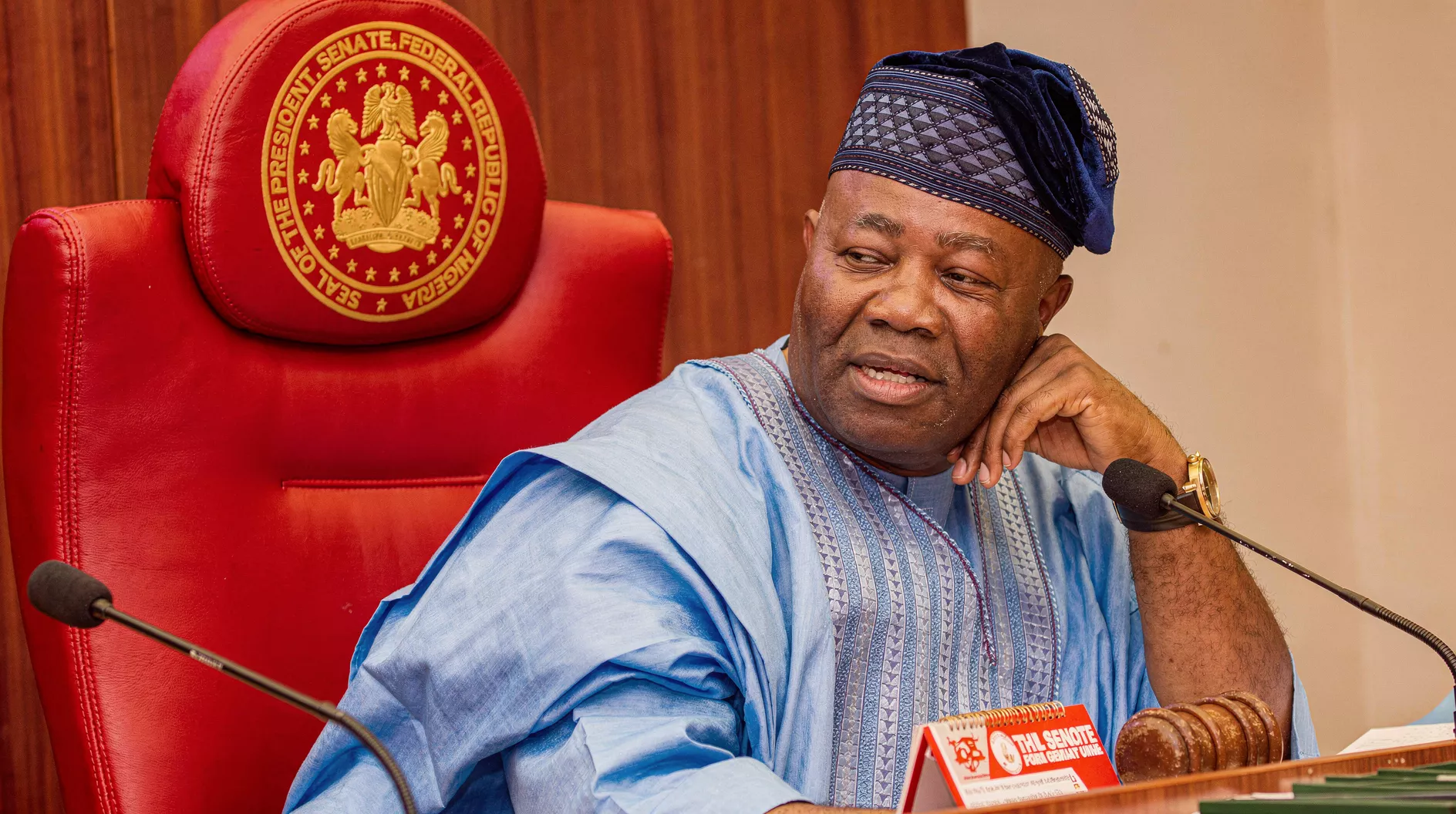


The Nigerian Senate has committed to supporting with all legislative powers discourses and initiatives that will deepen women inclusion in the country’s electoral system. Senate President Godswill Akpabio said that gender equity must now be put “on the front burner” of national politics.
Akpabio made the commitment at the maiden Democracy Day Lecture and Book Presentation held at the Sokoto State University, Sokoto . The event was organised to mark the memory of Hajiya Surraya Abubakar Margai, the first and only elected political office holder in Sokoto State since the return of democracy in 1999.
In a statement through his Chief of Staff, Chinedu Francis Akubueze, the Senate President said he was “thrilled” with the quality of the lecture and the symbolic choice of Margai as the honoree for the event, saying her legacy underscored the need for increased female participation in governance.
The Director-General of the Centre for Black and African Arts and Civilization, CBAAC, Aisha Adamu Augie, in her remarks, argued that the Nigeria democratic system cannot mature without deliberate inclusion and gender sensitivity in all levels of decision making.
Augie described women as “architects of development” and called on Nigerian men to allow space for women to lead, explaining that female leadership brings empathy and balance to the democratic space.
Guest lecturer Prof. Aisha Balarabe Bawa, Professor of History and International Studies at Usmanu Danfodiyo University Sokoto challenged the National Assembly to “honestly revisit” pending gender-related constitutional amendments and electoral reforms, warning that inclusive governance remains central to national unity.
Speaking on the theme, ‘Local Beats, Global Standards: Nigeria’s Gender Inclusion and Development Implications’, Prof. Bawa said the commemoration of June 12 should not be merely symbolic but a call to action for government, policymakers and citizens alike.
“The future of Nigeria’s democracy rests on the inclusiveness of its institutions,” Bawa said. “If we want sustainable progress, we cannot regard women’s political participation as an afterthought.”
She added: “A country that provides women with a seat at the table is a country that ensures broader engagement, increased legitimacy and sustainable progress. The task before us is clear: to build a Nigeria in which local democratic seats meet democratic standards.”
Prof. M. B. Yerima, Vice-Chancellor, Sokoto State University, also added his voice in the campaign, saying the days when a woman was relegated to the kitchen were over and that women had proven equal to the task in politics and administration.
He also said that “women are also less corrupt,” and urged stakeholders across party lines to create more opportunities for female leadership at the federal, state and local government levels.
The lecture, organized by Sokoto State University in collaboration with CBAAC, the Effective Governance Research Institute and the Productive Community for Sustainable Development Initiative, PCSDI, also featured the launching of a book on Margai written by Dr Odeh Godwin Onuh, Head of Department of History and Diplomatic Studies.
“The dialogue was intended to give the opportunity to scholars, policymakers, civil society and community leaders to discuss equitable representation,” said PCSDI Executive Director Nura Bello.
Some eminent Nigerians such as Senate Minority Leader Patrick Abba Moro were also honoured at the event for their contributions on women and youth empowerment.
This is another opportunity to own a faster-loading website to expand your business and take it digitally online. Meet the best website designer/master coder for any kind of website. Contact them now it is affordable Chat now: 09077260922
ALAGA360.COM.NG Advertisement Rate CardReach Thousands of Readers Across Nigeria and Beyond
Display Advertisement Rates
| Advertisement Type | Size | Duration | Price |
|---|---|---|---|
| Homepage Banner | 728 × 90 px | 1 Week | ₦30,000 |
| Homepage Banner | 728 × 90 px | 1 Month | ₦100,000 |
| Sidebar Banner | 300 × 250 px | 1 Month | ₦50,000 |
| Sponsored Article | Full Page | Permanent | ₦50,000 |
| Featured News Publication | Full Article | Per Post | ₦20,000 |
| Event Promotion | Article + Banner | 1 Week | ₦40,000 |
| Political Campaign Coverage | Article + Interview | Per Package | ₦100,000 |
| Business Profile Feature | Full Article | Permanent | ₦75,000 |
| Social Media Promotion | All Platforms | Campaign | Contact Us |
Special Advertising Packages
🥉 Bronze
- ✔ 1 Sponsored Article
- ✔ 1 Month Sidebar Banner
- ✔ Social Media Promotion
🥈 Silver
- ✔ 2 Sponsored Articles
- ✔ Homepage Banner (1 Month)
- ✔ Social Media Promotion
- ✔ Interview Publication
🥇 Gold
- ✔ Unlimited News Coverage
- ✔ Homepage Banner
- ✔ Featured Interview
- ✔ Social Media Campaign
- ✔ Event Coverage