





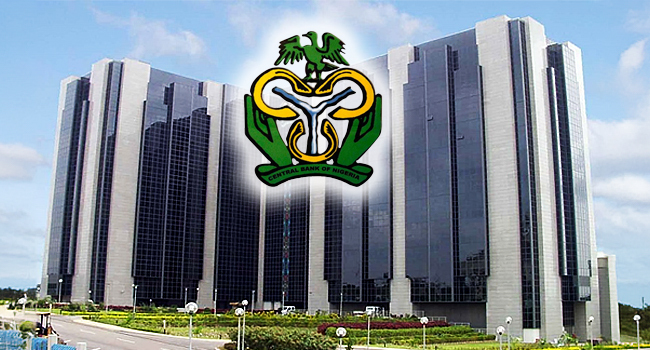





The Central Bank of Nigeria (CBN) has asked banks, fintech firms and other operators in the payments ecosystem to ensure that all payment transaction data generated in the country is stored and managed within Nigeria.
The apex bank also unveiled new measures to improve transparency, reduce market concentration and boost oversight in the payments space.
The directive was contained in a circular titled “Introduction of Market Structure Requirements, Data Localisation, Ultimate Beneficial Ownership Disclosure, and Systemic Oversight Measures in the Nigerian Payments System,” dated June 15, 2026, it was reported.
In the circular, the CBN said all financial institutions and payment operators facilitating transactions within the country are required to comply with the new data localisation requirement.
According to the apex bank, the policy is in consonance with existing data protection laws and regulations applicable in Nigeria.
“All financial institutions and participants facilitating payments within Nigeria shall ensure that payments transaction data generated within Nigeria are stored and managed in Nigeria in accordance with data protection laws and regulations applicable in Nigeria. The circular read.
“All affected financial institutions shall fully comply with this requirement effective January 1, 2027,” the CBN added.
The apex bank also directed banks, payment service providers and other financial institutions having digital payment operations to disclose ultimate beneficial owners of significant shareholders.
It said the move was needed to raise transparency in the sector and comply with anti-money laundering and counter-terrorism financing rules.
The CBN said, “All Deposit Money Banks, Payment Service Providers and other financial institutions with digital payments footprints shall disclose the Ultimate Beneficial Ownership (UBO) of significant shareholders in accordance with applicable extant laws and regulations, including Anti-Money Laundering, Combating the Financing of Terrorism and Counter Proliferation Financing regulations.”
The regulator also instructed the affected institutions to maintain accurate and up-to-date records of their beneficial owners.
It said the institutions “shall keep accurate and up-to-date UBO records and make such information available to the CBN upon request.”
The CBN, explaining the reason for the new requirements, said Nigeria’s payments system has expanded significantly in recent years, driven by electronic payments, digital financial services and the emergence of major operators with strong market presence.
The bank said, “The Nigerian payments ecosystem has undergone significant structural developments including rapid growth in electronic payments, increasing adoption of digital financial services and the emergence of operators with significant presence in the market across key payment activities.
It noted, however, that the growth had also created new risks requiring stronger regulatory attention.
“These developments have also raised concerns relating to market concentration, operational dependence, systemic importance, transparency of ownership structures and the localisation of critical payment data,” the apex bank said.
As part of efforts to prevent excessive dominance in the industry, the CBN also introduced market structure requirements for the institutions involved in card issuing and merchant acquiring.
As per the new rule, any licensed financial institution engaged in card issuing activities with more than 25 per cent market share in that segment will not be allowed to hold more than 15 per cent market share in merchant acquiring within the same period.
The circular stated that “any licensed financial institution engaged in card issuing activities that has more than 25 per cent of the market share in card issuing shall not have more than 15 per cent of the market share in merchant acquiring activities in the same period.
Equally, the CBN said “any licensed financial institution engaged in merchant acquiring activities that holds more than 25 per cent market share in merchant acquiring shall not hold more than 15 per cent market share in card issuing activities.”
The apex bank also ordered all regulated entities to submit monthly market share returns as part of the new oversight measures.
According to the CBN, the returns will enable it to monitor the structure of the payments system and to identify operators whose activities could generate systemic risks.
It instructed affected institutions to take measures to fully comply with the market structure requirements by the end of the year.
The circular stated that “all affected financial institutions shall take necessary measures to achieve full compliance not later than 31st December 2026.”
The new rules are expected to impact banks, fintech companies, payment service providers and other financial institutions operating in Nigeria’s fast-growing digital payments space.
Google News Feed
This is another opportunity to own a faster-loading website to expand your business and take it digitally online. Meet the best website designer/master coder for any kind of website. Contact them now it is affordable Chat now: 09077260922
ALAGA360.COM.NG Advertisement Rate CardReach Thousands of Readers Across Nigeria and Beyond
Display Advertisement Rates
| Advertisement Type | Size | Duration | Price |
|---|---|---|---|
| Homepage Banner | 728 × 90 px | 1 Week | ₦30,000 |
| Homepage Banner | 728 × 90 px | 1 Month | ₦100,000 |
| Sidebar Banner | 300 × 250 px | 1 Month | ₦50,000 |
| Sponsored Article | Full Page | Permanent | ₦50,000 |
| Featured News Publication | Full Article | Per Post | ₦20,000 |
| Event Promotion | Article + Banner | 1 Week | ₦40,000 |
| Political Campaign Coverage | Article + Interview | Per Package | ₦100,000 |
| Business Profile Feature | Full Article | Permanent | ₦75,000 |
| Social Media Promotion | All Platforms | Campaign | Contact Us |
Special Advertising Packages
🥉 Bronze
- ✔ 1 Sponsored Article
- ✔ 1 Month Sidebar Banner
- ✔ Social Media Promotion
🥈 Silver
- ✔ 2 Sponsored Articles
- ✔ Homepage Banner (1 Month)
- ✔ Social Media Promotion
- ✔ Interview Publication
🥇 Gold
- ✔ Unlimited News Coverage
- ✔ Homepage Banner
- ✔ Featured Interview
- ✔ Social Media Campaign
- ✔ Event Coverage