





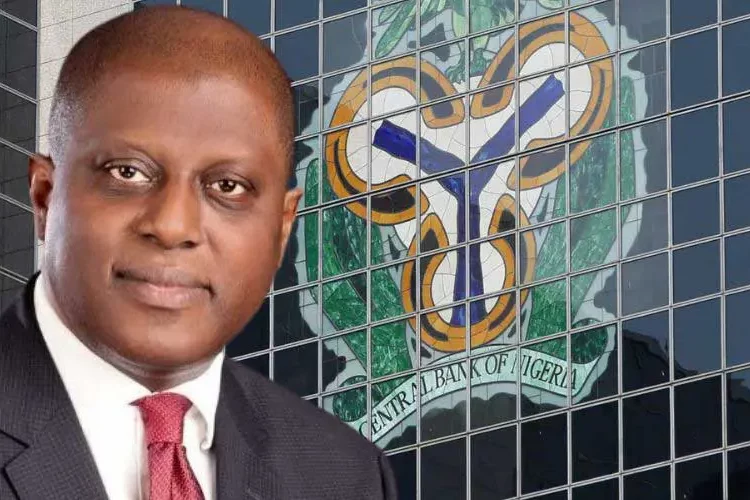



The Central Bank of Nigeria (CBN) has launched the Nigeria Payments System Vision (PSV) 2028, a fresh framework designed to build a more efficient, innovative, secure and financially inclusive payment system for the country.
It was gathered that the CBN Governor, Olayemi Cardoso, unveiled the framework in Abuja, stressing it would help boost the contribution of the financial sector to the Gross Domestic Product of Nigeria.
The initiative, Cardoso said, was aimed at boosting the country’s payment infrastructure, deepening financial inclusion and enhancing Nigeria’s competitiveness in the global financial system.
A modern payment system, according to him, is central to national development and must be built in a way that allows every Nigerian to participate meaningfully in the formal financial sector.
“The vision is anchored on a modern Payment System which is indispensable to national growth, financial inclusion and international competitiveness. It is about ensuring that every Nigerian is meaningfully involved in the financial industry.”
“Over the last two decades, Nigeria has made tremendous progress in the area of digital payments,” Cardoso said, adding that the nation’s payment ecosystem had become one of the most dynamic and innovative in the world.
He said developments in instant payments, digital adoption and fintech-led innovation had put Nigeria ahead of many countries on the continent and close to some leading global markets in certain areas.
“Over the past two decades, Nigeria’s payments ecosystem has evolved into one of the most dynamic and innovative in the world,” the CBN governor said. From instant payments and digital adoption to fintech-led innovation, our progress has often dictated the pace on the continent and, in several respects, compares favourably with leading global markets.
“While this progress has not always been fully reflected in global narratives, its impact on economic activity, financial inclusion and system resilience is evident across our economy.”
He said the speed, security and reach of payment systems had become key factors in determining the competitiveness of nations.
Cardoso also said that Nigeria’s experience showed the importance of sustained investment in innovation, infrastructure and inclusion.
The Payments System Vision 2028, he said, was based on the solid foundation already laid in Nigeria’s payment industry.
He said the new framework would act as a strategic roadmap for the next phase of transformation in the sector.
The goal, he said, is to create a payment ecosystem that is secure, inclusive, resilient and globally competitive.
Cardoso said, “The Payments System Vision 2028 (PSV 2028) builds on that strong foundation. It provides a strategic roadmap for the next phase of transformation and reflects our ambition to build a payments ecosystem that is secure, inclusive, resilient and globally competitive”.
He said the global payments landscape is changing rapidly and new technologies are reshaping how value is exchanged across countries and sectors.
The CBN governor observed that digital commerce was growing, cross-border transactions were gaining importance and expectations on speed, convenience, security and interoperability were increasing.
Cardoso said payment systems could no longer be considered just as a channel for transferring money, but as platforms for innovation, financial inclusion and economic growth.
Efficient payment systems would reduce the cost of doing business, improve productivity, support trade, strengthen transparency and broaden participation in economic activity, he said.
“In this environment, payments are no longer just a way to move funds,” he said. They are innovation platforms, inclusion enablers, critical infrastructure for economic growth.
“Efficient payment systems lower the cost of doing business, increase productivity, encourage transparency, facilitate trade and increase participation in economic activity for Nigeria. “In a modern economy, payment infrastructure is not just a financial utility, it is a strategic national asset.”
The CBN governor said PSV 2028 would ensure that Nigeria’s payment ecosystem remains safe, resilient, inclusive and globally competitive while supporting broader economic objectives.
The framework was part of the wider reform agenda pursued by the apex bank since 2023, he added.
Framework for Trade and Remittances Support
Cardoso said strengthening the country’s payment system would also help efforts to stabilize the economy, facilitate trade and remittance flows, deepen investor confidence and improve Nigeria’s external position over time.
He said, “That’s why PSV 2028 matters. It is meant to ensure that Nigeria’s payments ecosystem is secure, resilient, inclusive and globally competitive, while also supporting our wider economic aspirations.
“PSV 2028 is also an important part of the wider reform agenda that the Central Bank has undertaken since 2023. This Vision will support ongoing efforts to stabilize the economy, facilitate trade and remittance flows, deepen investor confidence, and contribute to improvements in Nigeria’s external and Balance of Payments position over time by strengthening the efficiency, resilience, and international connectivity of our payments ecosystem.”
The CBN governor said the success of the vision would largely depend on effective implementation and collaboration among key stakeholders in the financial and technology sectors.
He called on banks, fintech companies, the Nigerian Communications Commission, telecommunications companies and other players in the industry to play their roles to achieve the objectives of the framework.
CBN Outlines Five Priority Areas
Earlier, the Deputy Governor, Policy of the CBN, Dr Muhammad Abdullahi said the new vision was anchored on five mutually reinforcing priorities.
The priorities would improve payment infrastructure, enhance inclusion, foster innovation, enhance cross-border payments and protect the integrity of the financial system, he said.
The framework would help build an interoperable and resilient payment infrastructure that can support a digital economy at scale, said Abdullahi.
PSV 2028 will also focus on financial inclusion, consumer protection and financial literacy so that individuals, households and businesses can participate confidently in the formal financial system, he said.
“The vision seeks to build interoperable, and resilient payment infrastructure capable of supporting a digital economy at scale; it prioritises financial inclusion, consumer protection, and financial literacy to ensure that individuals, households, and businesses can participate confidently and meaningfully in the formal financial system,” he said.
The framework would support innovation and emerging technologies that could expand access, improve efficiency and create new economic opportunities, Abdullahi added.
PSV 2028 will incorporate open banking, digital assets, artificial intelligence and other transformative solutions, he said.
The framework “welcomes innovation and emerging technologies, including open banking, digital assets, artificial intelligence and other transformative solutions that have the potential to increase efficiency, broaden access and unlock new economic opportunities,” the deputy governor said.
This is another opportunity to own a faster-loading website to expand your business and take it digitally online. Meet the best website designer/master coder for any kind of website. Contact them now it is affordable Chat now: 09077260922
ALAGA360.COM.NG Advertisement Rate CardReach Thousands of Readers Across Nigeria and Beyond
Display Advertisement Rates
| Advertisement Type | Size | Duration | Price |
|---|---|---|---|
| Homepage Banner | 728 × 90 px | 1 Week | ₦30,000 |
| Homepage Banner | 728 × 90 px | 1 Month | ₦100,000 |
| Sidebar Banner | 300 × 250 px | 1 Month | ₦50,000 |
| Sponsored Article | Full Page | Permanent | ₦50,000 |
| Featured News Publication | Full Article | Per Post | ₦20,000 |
| Event Promotion | Article + Banner | 1 Week | ₦40,000 |
| Political Campaign Coverage | Article + Interview | Per Package | ₦100,000 |
| Business Profile Feature | Full Article | Permanent | ₦75,000 |
| Social Media Promotion | All Platforms | Campaign | Contact Us |
Special Advertising Packages
🥉 Bronze
- ✔ 1 Sponsored Article
- ✔ 1 Month Sidebar Banner
- ✔ Social Media Promotion
🥈 Silver
- ✔ 2 Sponsored Articles
- ✔ Homepage Banner (1 Month)
- ✔ Social Media Promotion
- ✔ Interview Publication
🥇 Gold
- ✔ Unlimited News Coverage
- ✔ Homepage Banner
- ✔ Featured Interview
- ✔ Social Media Campaign
- ✔ Event Coverage