






For many years, the Attorney General of the Federation (AGF) office was embroiled in disputes that frequently obscured its constitutional significance. The question of whether the position should be kept apart from the Minister of Justice was hotly debated. As public trust in the office slowly declined, critics bemoaned what they saw as rising politicization.
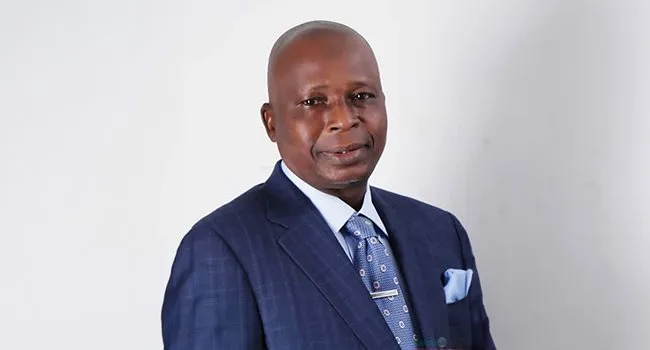
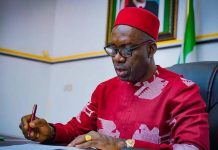
But something amazing seems to be taking place today. The status and dignity of that post are being restored quietly and without fanfare. Prince Lateef Olasunkanmi Fagbemi (SAN) deserves a large portion of the credit for this, as his leadership as the Federation’s Attorney General and Minister of Justice has been characterized by professionalism, moderation, and a deep regard for the organization he oversees.
In light of this, Fagbemi’s term has been relatively peaceful, but this should not be confused with inaction. Not at all. The legal struggle for local government sovereignty has been perhaps his most significant involvement.
For many years, state governments controlled and interfered with municipal governments to varied degrees, leaving them largely at their mercy.
The Federal Government made the politically dangerous choice to challenge the practice before the Supreme Court while Fagbemi was in charge.
The ensuing ruling, which upheld local governments’ financial independence, would eventually be regarded as one of the Fourth Republic’s most significant constitutional rulings.
The case marked a daring endeavor to strengthen constitutional governance and deepen grassroots democracy, regardless of practical challenges.
To be fair, the AGF has contributed.The law has made its voice known. The Supreme Court has made a definite and unmistakable statement. Politics and administration now bear greater responsibility than the courtroom.
President Bola Ahmed Tinubu must now show the political will necessary to assure that local governments receive their allocations straight from the Federation Account and to ensure compliance with the ruling.
In the end, history might evaluate the case based on how faithfully the ruling is carried out rather than the strength of the legal arguments that led to success.
After all, the desire of governments to abide by court rulings is what gives them their actual worth, not the persuasiveness of their statements.
The growing focus on terrorist prosecutions has been as important. Nigerians expected convictions for years, not just arrests. After all, capturing suspects is not the only test of criminal justice. It is using due process to secure convictions.
Counterterrorism does not stop on the battlefield, as seen by the successful prosecution of individuals responsible for the horrible Owo Catholic Church massacre. The courtroom is where it all ends.
Convictions are what ultimately solidify security victories. Under Fagbemi, the Ministry of Justice has been crucial in this regard.
The controversy surrounding the prosecution of juveniles detained in relation to the EndBadGovernance protests provided another illustration of cautious leadership. When youngsters who were obviously emaciated were charged with treason, the public was outraged.
Instead of delving deeper, the AGF stepped in, demanded the case file, and then ordered the accusations to be dropped. It served as a reminder that prosecutorial authority is more than just a tool for punishment. They serve as tools of justice as well. The AGF opted for compassion over rigidity and restraint over retaliation during a period of intense emotion.
What hasn’t happened is perhaps just as significant. Fagbemi has mostly let the courts and the law speak, in contrast to earlier times when Attorneys-General were often at the center of institutional conflicts and public issues.
He has behaved in a way that is appropriate for the country’s highest law officer—one of moderation, dignity, and professionalism.
His clear resolve to keep his office and himself away from the temptations of partisan politics has, in fact, been one of the most remarkable aspects of his administration.
He hasn’t tried to turn the position into a stage for political grandstanding or pursued political importance.
That distinction is important.
Because the AGF post is too significant to be reduced to just another political position.
In fact, the question of whether the AGF’s office should be kept apart from the Minister of Justice’s was hotly contested for years by legal experts and public affairs pundits.
The argument was primarily motivated by worries that the combination of the two offices frequently led to conflicts between partisan political motives and professional legal obligations.
Calls for such constitutional surgery were only reinforced by subsequent disputes between some of the office’s occupants.
Strangely, under Prince Lateef Olasunkanmi Fagbemi’s leadership, the severity of that discussion has significantly decreased.
This may be due to the fact that the public’s trust has been progressively rebuilt thanks to the actions of a classic gentleman who has handled the office with respect, professionalism, and prudence.
His tenure serves as a reminder that structural flaws are not necessarily the reason why institutions fail.
They occasionally fail due to the personalities of individuals in charge of them.
Occasionally, what seems to call for a constitutional change only needs the appropriate occupier.
That may be one of the stewardship’s subtle yet important lessons.
Everyone cannot be satisfied by any AGF.
No public authority should be shielded from criticism either.
However, criticism shouldn’t stop people from getting recognition when they deserve it.
The current AGF’s greatest accomplishment may not be found in a single instance.
It involves reestablishing the honor and dignity of an office whose legitimacy had previously been questioned.
Noise is rewarded in politics. Results are rewarded by history.
Furthermore, there are enough signs to indicate that Prince Lateef Olasunkanmi Fagbemi is making an effort that is becoming less common in Nigerian public life, even though it may still be too early to make a firm assessment of his term.
He is prioritizing institution over individuality.
Proceed above the spectacle.
Politics is secondary to the law.
That is noteworthy in and of itself.
Because quiet improvements can occasionally become the most enduring legacy of all in a nation that is frequently distracted by noise.
And maybe that’s why the AGF’s Office has been quietly restored.
This is another opportunity to own a faster-loading website to expand your business and take it digitally online. Meet the best website designer/master coder for any kind of website. Contact them now it is affordable Chat now: 09077260922
ALAGA360.COM.NG Advertisement Rate CardReach Thousands of Readers Across Nigeria and Beyond
Display Advertisement Rates
| Advertisement Type | Size | Duration | Price |
|---|---|---|---|
| Homepage Banner | 728 × 90 px | 1 Week | ₦30,000 |
| Homepage Banner | 728 × 90 px | 1 Month | ₦100,000 |
| Sidebar Banner | 300 × 250 px | 1 Month | ₦50,000 |
| Sponsored Article | Full Page | Permanent | ₦50,000 |
| Featured News Publication | Full Article | Per Post | ₦20,000 |
| Event Promotion | Article + Banner | 1 Week | ₦40,000 |
| Political Campaign Coverage | Article + Interview | Per Package | ₦100,000 |
| Business Profile Feature | Full Article | Permanent | ₦75,000 |
| Social Media Promotion | All Platforms | Campaign | Contact Us |
Special Advertising Packages
🥉 Bronze
- ✔ 1 Sponsored Article
- ✔ 1 Month Sidebar Banner
- ✔ Social Media Promotion
🥈 Silver
- ✔ 2 Sponsored Articles
- ✔ Homepage Banner (1 Month)
- ✔ Social Media Promotion
- ✔ Interview Publication
🥇 Gold
- ✔ Unlimited News Coverage
- ✔ Homepage Banner
- ✔ Featured Interview
- ✔ Social Media Campaign
- ✔ Event Coverage